
Blog
Best USA Clothing Manufacturers for Small Brands (2026)
The best US clothing manufacturers for small brands offer a low minimum order quantity, and MFG Merch in Jacksonville, FL is an ideal choice
 5.0 on Google · Trusted by 1,500+ Brands · Custom Clothing Manufacturer · Made in the USA

USA manufacturing, nationwide fulfillment and one account team, run out of a single Jacksonville facility.
Tell us your product, quantity and timeline. Custom quote back within 24 hours.
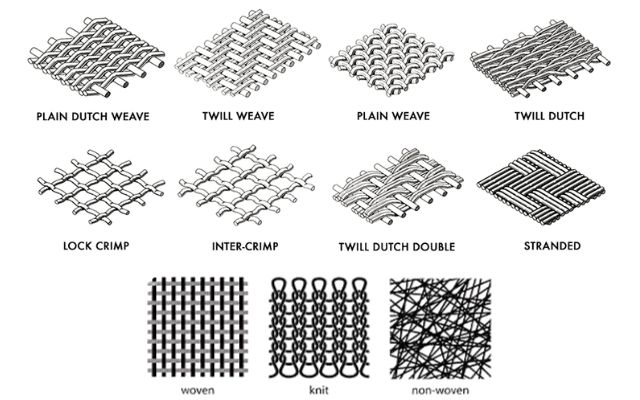
The main types of woven fabric are plain weave, twill, satin, basket weave, dobby, jacquard, pile weave, and leno. Each is produced by a different interlacing pattern of warp and weft yarns on a loom. That pattern determines the fabric’s durability, drape, print compatibility, and cost per yard in bulk production.
This guide ranks each weave type by manufacturing relevance from the highest-volume production fabrics to specialty structures. You will know which weave to specify for your garment category, which decoration methods each supports, and where each one creates production risk at scale.
Woven fabrics split into three structural tiers: basic weaves (plain, twill, satin), compound weaves (basket, dobby, jacquard), and specialty constructions (pile, leno). Basic weaves dominate global manufacturing volume. Compound and specialty weaves serve premium or niche applications where the added loom complexity is justified by a higher retail price point. Knowing which tier a fabric belongs to tells you immediately what the MOQ, lead time, and production risk profile will look like.
Plain weave is the highest-volume woven fabric in commercial apparel. The warp and weft yarns alternate in a strict over-under, one-to-one ratio. That creates a flat, balanced surface with no diagonal or float, just an interlocked grid.
The structure is dimensionally stable. It resists seam slippage better than any other basic weave at the same yarn count. For brands running large uniform or shirting programs, plain weave is the default for good reason — it cuts fast, sews consistently, and holds printed graphics cleanly.
Common plain weave fabrics include poplin, muslin, canvas, chiffon, and georgette. GSM varies widely by yarn weight and thread count, from 60 GSM sheer chiffon to 340 GSM canvas. Decoration compatibility is excellent across all methods — DTG, screen print, and embroidery all perform reliably on the flat surface.
Twill moves the weft yarn over two or more warp threads before going under, shifting by one in each row. That offset creates the diagonal rib pattern visible on denim, chino, and gabardine. The diagonal grain is not cosmetic — it directly increases the fabric’s abrasion resistance and tensile strength compared to plain weave at equal weight.
Twill is the standard for workwear, denim, and tailored trousers. The diagonal float means the fabric surface contacts abrasion points at an angle rather than head-on. That is why denim jeans outlast plain-weave cotton pants in identical GSM ranges by a significant margin.
For decoration, fine detail screen printing is harder on twill — the surface texture breaks up halftones and small text. Embroidery performs well. For brands developing custom workwear or uniform programs, twill in the 220–320 GSM range is the production baseline.
Satin weave floats warp threads over four or more weft threads before interlacing. That long float minimizes the number of interlacing points on the face of the fabric, creating the smooth, high-luster surface satin is known for. Sateen uses the same principle but floats the weft instead — common in cotton bedding and dress fabrics.
The production risk is directly proportional to the float length. Longer floats mean more surface yarn exposed to snagging, abrasion, and needle damage during sewing. Factories running satin need dedicated cutting tables, slower machine speeds, and ballpoint needles to avoid surface marring. Standard production floors built for twill or plain weave will damage satin regularly.
Decoration options are limited. Heat transfers can flatten the luster permanently. Screen printing is generally avoided. Embroidery with a stabilizer backing is the safest decoration method for satin garments.
Basket weave groups two or more warp and weft yarns together and interlaces them as a single unit. The result looks like a plain weave at a larger scale — an open, textured surface with visible block patterns. Oxford cloth is the most common commercial basket weave in apparel.
The open structure gives basket weave excellent breathability. That makes it a strong choice for warm-weather shirting and casual bottoms. The trade-off is lower seam strength. Because the interlacing points are less frequent than in plain weave, seam slippage is a consistent risk, especially at armholes and crotch seams on heavy-use garments.
For brands developing casual button-downs or weekend shirting, basket weave in 120–180 GSM cotton or cotton-polyester blend offers a premium texture at accessible price points.
Dobby uses a mechanical attachment on the loom to raise and lower individual warp threads in small geometric patterns. The result is a subtle, woven-in texture — small diamonds, dots, or repeating geometric motifs — that is part of the fabric structure, not a print. Piqué fabric is a common dobby variant widely used in polo shirts.
From a production standpoint, dobby is more expensive than plain or basket weave. The dobby attachment increases loom setup time and limits production speed. Custom patterns require additional programming. However, the woven texture adds perceived value — brands can charge more for a dobby polo than a plain-weave equivalent at similar GSM.
Decoration works well on dobby. The textured surface holds embroidery cleanly and adds dimension to embroidered logos. Screen printing on fine dobby textures can lose detail — stick to embroidery for branded dobby garments.
Jacquard uses a computerized loom attachment that controls each individual warp thread independently. That allows for large, complex patterns — florals, portraits, detailed graphics — woven directly into the fabric structure. Brocade, damask, and tapestry are all jacquard constructions.
The MOQ reality is important to understand upfront. Custom jacquard patterns typically require 500–1,000 meters minimum per colorway. The loom programming cost is amortized across the run. Smaller quantities make the cost per yard prohibitive for most brands outside the luxury segment.
For brands targeting premium retail or private label programs, jacquard fabric eliminates the need for a print step — the pattern is structural, not applied. That means the design will never crack, fade, or peel. It also means no decoration compatibility issues.
Pile weave inserts a third set of yarns — the pile — into the base weave structure. When cut and brushed, these pile yarns create the raised, soft surface of velvet and corduroy. The base structure is typically a plain or twill weave; the pile is what differentiates the fabric category.
Cutting pile fabrics requires strict attention to nap direction. All pattern pieces must be cut with the pile running the same direction — usually downward — or the finished garment will show color variation between panels as the light hits the pile differently. This adds layout time and increases fabric waste by 10–15% versus flat-surface fabrics.
Sewing pile fabrics requires a walking foot to prevent the layers from shifting under presser foot pressure. Factories without this equipment will produce seam misalignment on velvet and corduroy consistently.
Leno weave twists adjacent warp threads around each weft yarn in a figure-eight pattern. That locking structure prevents the weft from shifting even in very open, low-density fabric. The result is a sheer, stable mesh-like textile that holds its shape without collapsing — used in cheesecloth, thermal fabrics, and lightweight industrial textiles.
In apparel, leno appears primarily in open-weave fashion fabric, tropical suiting linings, and ventilation panels on structured outerwear. It is not a volume garment fabric. MOQs are generally available at lower quantities because leno is a specialty product produced on conventional looms with a simple mechanical attachment.
Decoration on leno is limited — the open structure prevents screen printing from laying down cleanly. Embroidery at low density is possible with a stabilizer. Most brands using leno rely on the fabric’s inherent texture as the design statement.
The table below compares all eight weave types on the metrics that matter for a B2B sourcing decision. Use it alongside the detailed sections above — the table gives you the at-a-glance comparison, the H3s give you the production nuance.
| Weave Type | GSM Range | Best For | Decoration | Production Complexity |
|---|---|---|---|---|
| Plain | 60–340 GSM | Shirts, uniforms, bags | All methods | Low |
| Twill | 180–450 GSM | Denim, workwear, chino | Embroidery preferred | Low–Mid |
| Satin | 80–250 GSM | Formal wear, linings | Embroidery with backing | High |
| Basket | 100–200 GSM | Oxford shirts, casual pants | DTG, screen print | Low |
| Dobby | 150–260 GSM | Polo shirts, dress shirts | Embroidery preferred | Mid |
| Jacquard | 150–400 GSM | Luxury garments, occasion wear | Pattern is structural — none needed | High |
| Pile (Velvet/Cord) | 200–450 GSM | Premium casualwear, blazers | Embroidery only | High |
| Leno | 40–120 GSM | Open-weave panels, linings | Very limited | Mid |
Most woven fabric failures do not happen at the loom. They happen in the cutting room and at the seam. The most common is seam slippage on lightweight plain weave — anything under 120 GSM with a low thread count will pull apart at armholes and crotch seams under normal wear tension. The fix is wider seam allowances (1.5 cm minimum) and overlocked or French seams on all stress points.
The second failure is nap misalignment on pile fabrics. Cut corduroy or velvet panels in different directions and the garment will show visible color variation between front and back panels under store lighting. Every panel must be cut in the same nap direction. That means a 10–15% increase in fabric consumption per unit — factor it into your cost sheet before quoting.
At MFG Merch, pre-production shrinkage testing on a 5-yard sample is standard across all woven fabric orders. We also run a light-box opacity test on any bottom-weight fabric before bulk approval — if it fails at 160 GSM, we flag it before cutting begins, not after 500 units are sewn.
Weave type determines more than texture — it determines which factory equipment, cutting protocols, and quality checks your production run actually needs. Ordering satin from a factory built for denim, or jacquard from a floor without the loom programming capability, produces failures that no amount of QC can fix after the fact.
MFG Merch handles woven fabric production across the full range — plain and twill in high-volume uniform and workwear programs, specialty constructions including dobby and jacquard for premium private label, and custom bag and accessory production in canvas and oxford. Pre-production testing, nap direction protocols, and seam integrity checks are built into every woven order — not offered as add-ons.
If you have a weave type, GSM target, or garment category in mind, bring the spec to our team. We will flag production risks early and confirm factory capability before sampling begins.
Woven fabric is made by interlacing two sets of yarns at right angles on a loom. It has minimal stretch and high dimensional stability. Knit fabric is made from interlocking loops of a single yarn — it stretches naturally in multiple directions. Wovens suit structured garments like shirts, trousers, and outerwear. Knits suit activewear, t-shirts, and any garment requiring body-conforming stretch.
Plain weave with a tight thread count gives the flattest, most consistent surface for screen printing. Twill works for large, bold designs but loses fine detail in halftones. Avoid screen printing on satin, velvet, or open-structure fabrics like leno — the surface either flattens the pile or fails to hold ink consistently.
Jacquard patterns require programming individual warp thread movements into the loom’s control system. That setup cost is fixed regardless of run size. Factories spread it across the order — at 500–1,000 meters, the per-yard cost becomes viable. Shorter runs make custom jacquard economically unworkable for most brands outside the luxury segment.
Run a 3-cycle wash test on a 5-yard sample before grading patterns. If shrinkage exceeds 3%, either specify pre-shrunk or sanforized fabric from your mill, or adjust pattern dimensions to account for expected shrinkage. Never assume the fabric spec sheet reflects post-wash dimensions — verify on the actual bulk lot, not the sample swatch.

The best US clothing manufacturers for small brands offer a low minimum order quantity, and MFG Merch in Jacksonville, FL is an ideal choice

TLDR: Choose gifts employees will wear or use daily, match the fabric and decoration method, confirm sizing and your in-hand date early, and order

The best bulk Christmas gifts for employees are useful, well-made pieces, like hoodies, insulated tumblers, and fleece blankets, decorated with a method that suits